
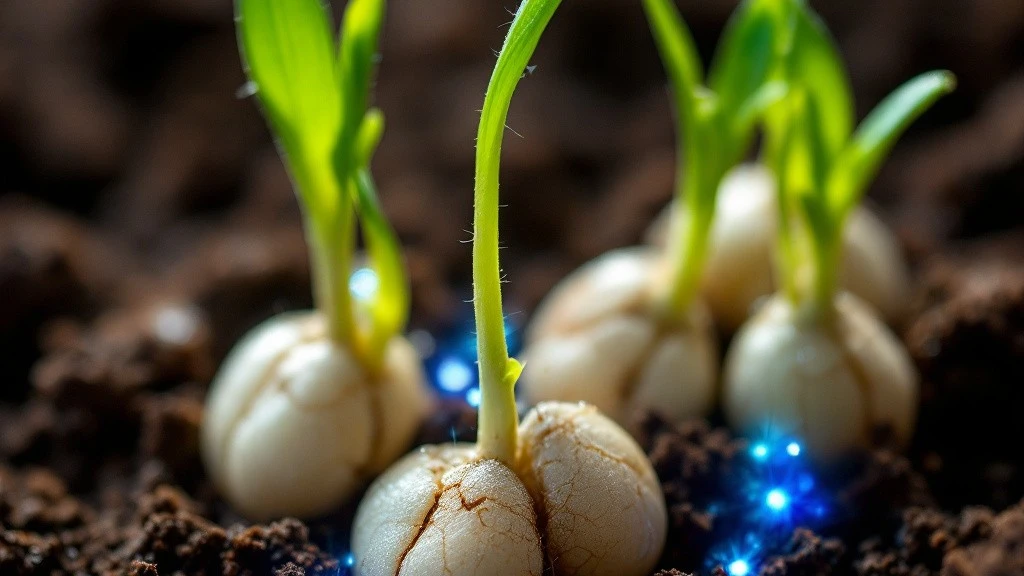
Exploring Seed Germination Treatments and the Promise of Plasma Technology
We often marvel at the journey from a tiny seed to a thriving plant, the very foundation of our food systems and ecosystems. But that journey’s crucial first step – germination – isn’t always straightforward. Seeds face numerous hurdles: dormancy, tough seed coats, soil-borne pathogens, and challenging environmental conditions. Ensuring a strong, uniform start is paramount for successful agriculture and horticulture.
This is where seed germination treatments come into play.
Why Treat Seeds Before Sowing?
Think of seed treatments as giving seeds a head start, equipping them for the challenges ahead. Their importance lies in:
- Breaking Dormancy: Many seeds have natural dormancy mechanisms preventing germination until conditions are right. Treatments can overcome these barriers, ensuring timely sprouting.
- Enhancing Germination Rate & Speed: Faster, more uniform germination leads to a consistent crop stand, simplifying management and maximizing yield potential.
- Protecting Against Pathogens: Seeds and young seedlings are vulnerable to fungi and bacteria. Treatments can offer crucial early-stage protection, reducing disease incidence.
- Improving Stress Tolerance: Some treatments can help seedlings better withstand early environmental stresses like drought or salinity.
- Optimizing Resource Use: A strong, uniform stand makes more efficient use of water, nutrients, and light.
- Traditional methods often involve chemical fungicides, pesticides, or soaking techniques. While effective to varying degrees, concerns about chemical residues, environmental impact, and pathogen resistance are driving the search for innovative, sustainable alternatives.
Plasma-Enhanced Seed Germination (PESG)
One of the most exciting frontiers in seed treatment is the use of Cold Atmospheric Plasma (CAP). Plasma, often called the “fourth state of matter,” is an energized gas containing ions, electrons, free radicals, and UV radiation. When applied carefully to seeds, it can induce remarkable changes without the need for harsh chemicals.
How Does Plasma Technology Benefit Seeds?
Plasma treatment works on multiple levels:
- Surface Sterilization: The active species in plasma can effectively eliminate surface pathogens (fungi, bacteria) without penetrating deep into the seed, reducing the need for chemical fungicides.
- Seed Coat Modification: Plasma can gently etch or modify the seed coat, increasing its permeability to water and oxygen – essential triggers for germination. This is particularly beneficial for hard-coated seeds.
- Surface Activation: Plasma can introduce reactive oxygen and nitrogen species (RONS) onto the seed surface. These can act as signalling molecules, breaking dormancy and stimulating metabolic processes essential for germination and early growth.
- Enhanced Water Uptake: By altering surface properties, plasma can improve the seed’s ability to absorb water, speeding up the germination process.
Compared to some traditional methods, PESG offers compelling benefits:
- Eco-Friendly: It’s primarily a physical/physico-chemical process, often drastically reducing or eliminating the need for chemical inputs and minimizing environmental concerns.
- Accelerated & Increased Germination: Studies consistently show faster germination times and higher overall germination percentages across various plant species.
- Enhanced Seedling Vigor: Seedlings emerging from plasma-treated seeds often exhibit stronger root and shoot growth, leading to more robust plants.
- Broad Applicability: Research shows promise across a wide range of crops, from grains and vegetables to flowers and trees.
- Dry Process: Unlike soaking methods, plasma treatment is typically a dry process, simplifying handling, storage, and sowing.
The Future is Germinating
Plasma-enhanced seed germination is more than just a scientific curiosity; it represents a significant step towards more sustainable and efficient agriculture. As research progresses and technology becomes more accessible, PESG holds the potential to:
Boost crop yields, contributing to food security.
Reduce reliance on agrochemicals, benefiting environmental health.
Improve crop resilience in the face of climate change.
Offer new solutions for difficult-to-germinate species in horticulture and ecological restoration.
What are your thoughts on innovative seed treatments? Have you encountered plasma technology in agriculture or research? Let’s discuss the future of giving our seeds the best possible start!