Silent Dairy Crisis
Despite being a household staple, milk is the third most wasted food product in the UK, with 490 million pints discarded annually valued at £150 million. Unlike other food waste, 90% of this loss occurs within the consumer’s home, representing a critical failure of current preservation packaging.
This waste is an environmental disaster. With a carbon intensity of 1.2kg CO2 e per litre, UK milk waste generates nearly 600,000 tonnes of avoidable CO2 e annually equivalent to adding 350,000 cars to the road.
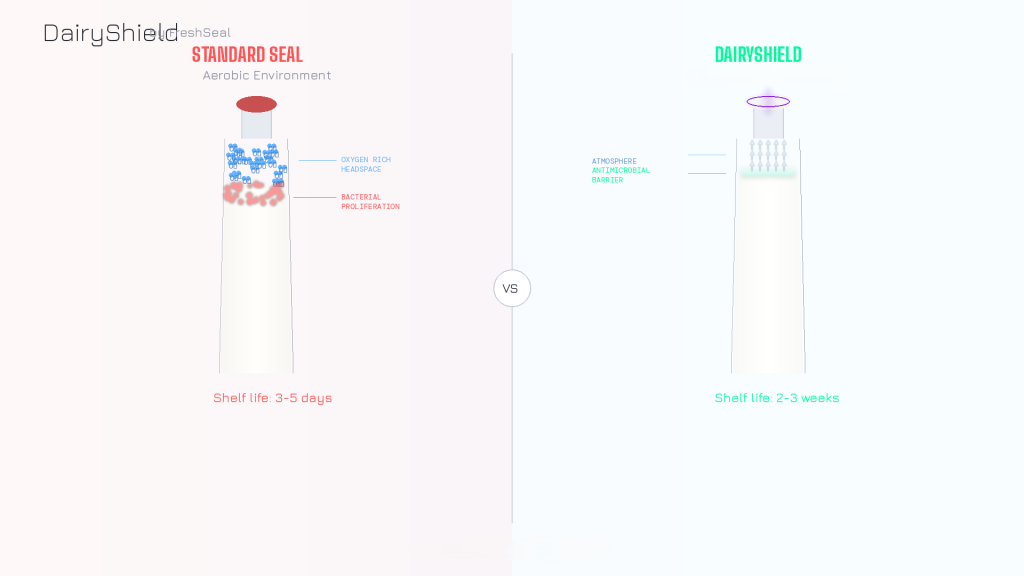
The root cause is a lack of information and intervention. The recent retail shift from “Use By” to “Best Before” dates has removed the safety net, forcing consumers to rely on a subjective “sniff test.” Risk-averse consumers needlessly discard safe milk, while those with poor olfactory senses risk consuming proteolytically spoiled product. Current passive lids offer zero protection against this spoilage and zero intelligence to guide consumption.
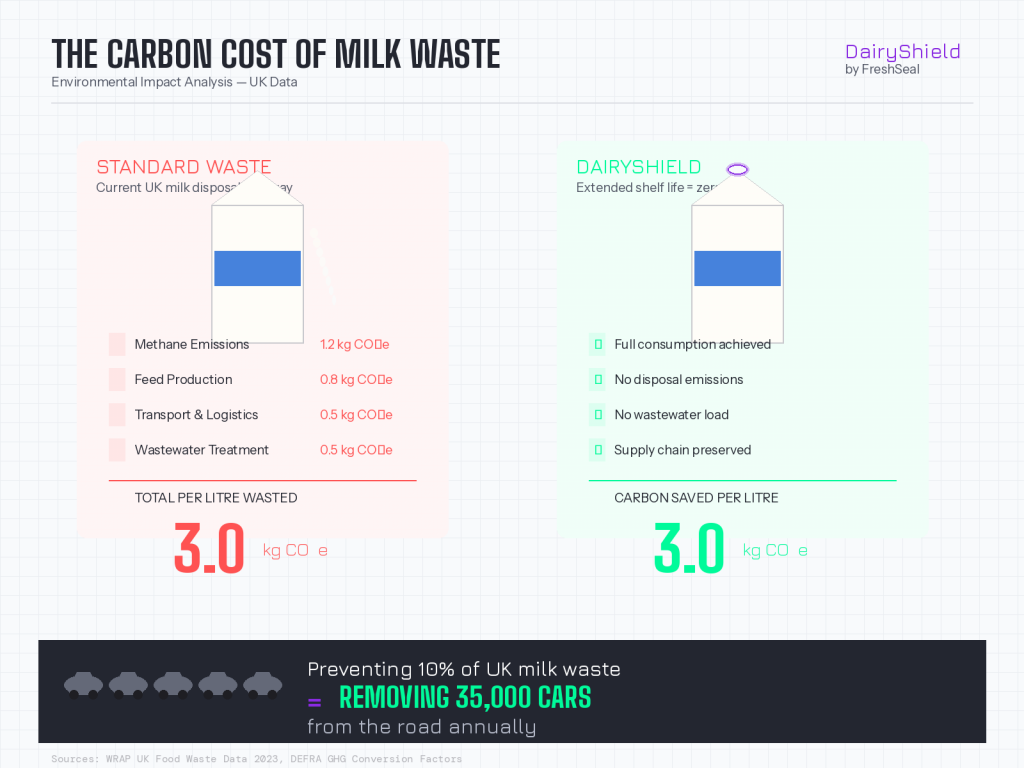
The Environmental Impact of Disposal:
The environmental cost of milk waste extends beyond production. Liquid milk is classified as a high-strength pollutant with a Biological Oxygen Demand (BOD) of approx. 100,000 mg/L—making it 300 times more polluting than raw sewage.
When discarded into the waste stream, destroys Aquatic ecosystems: The rapid bacterial breakdown of milk solids strips watercourses of oxygen, leading to immediate asphyxiation of aquatic life (eutrophication).
Damages Infrastructure: Dairy fats contribute to sewer blockages (fatbergs effect), increasing maintenance costs for utilities like Scottish Water.
Increases Treatment Emissions: The high pollutant load requires energy-intensive aeration at wastewater treatment plants, creating a ‘secondary carbon footprint’ associated with the disposal itself.
Health Impact
Drinking spoiled or poorly stored milk can cause food poisoning, with symptoms such as vomiting, diarrhoea and abdominal pain. While most healthy adults recover quickly, the risks are significantly higher for infants, older adults, pregnant women and people with weakened immune systems, where infections can lead to serious complications and hospitalisation. Current packaging gives no real-time indication of spoilage, forcing consumers to rely on a crude “sniff test”, which leads to both unnecessary disposal of safe milk and avoidable exposure to spoiled product.
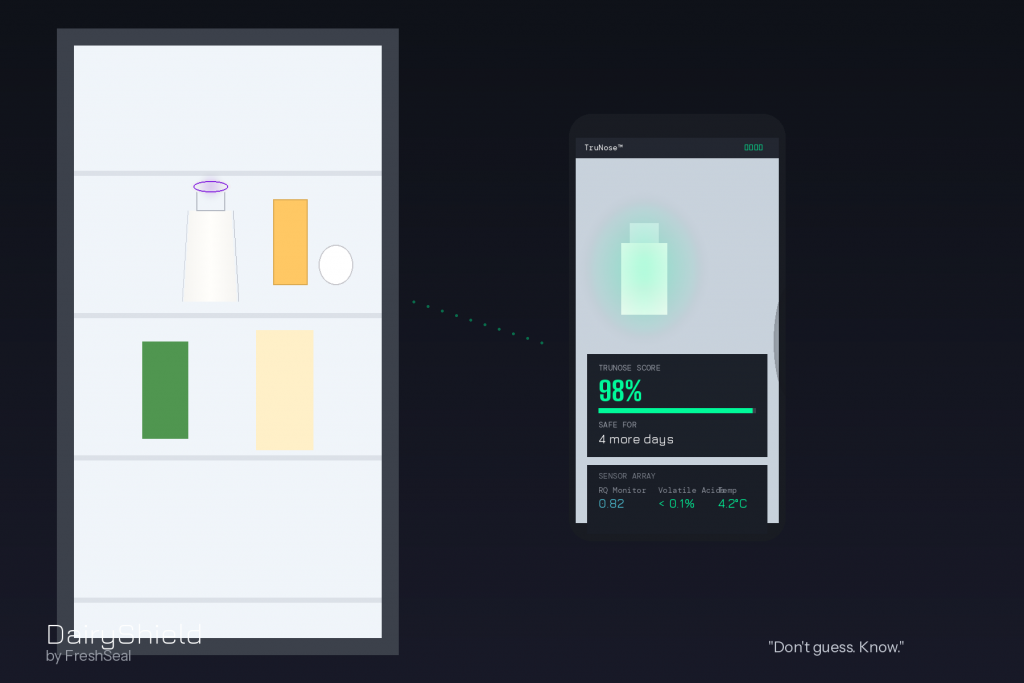
Solution:- A smart, non-thermal “freshness lid” for perishable liquids.
The aim is to extend usable shelf life, cut avoidable dairy waste and give clear, data-driven freshness information to dairies, retailers and consumers.
Instead of relying on crude date labels and a “sniff test”, PlanetFix turns the closure into an active preservation and sensing interface.
DairyShield @ Halo _ Freshseal Tech – Patent pending